
Help Prepare Your Pet for the Vet
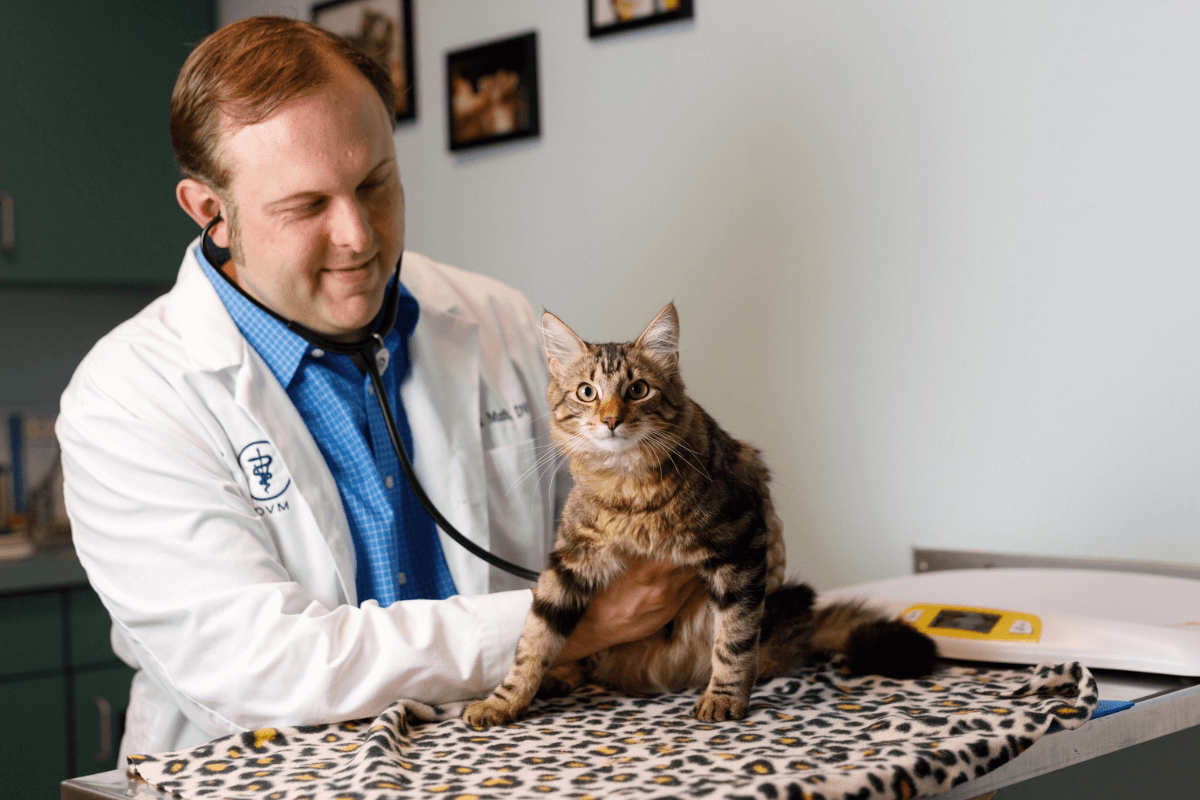
Dr. Muth examines a cat.
You've scheduled your pet's vet appointment. Here is how a little preparation can help make the visit smoother, safer, and more effective.
If your pet is new to the clinic, bring their medical records (especially vaccination history). If records are coming from another veterinary or emergency facility, request them several weeks in advance. Having this information helps avoid repeated tests and ensures timely care.
Your vet may ask for fecal (poop) or urine samples. Annual fecal testing is recommended and is an important part of their regular wellness care as intestinal parasites can affect both pets and people., A fecal sample may also need to be tested if your pet has been vomiting or has diarrhea. While clinics often collect urine samples during the visit, if advised, bringing one from home as a backup is helpful.
Be ready to share details about medications, preventatives, and supplements. Bring containers, photos of labels, or a written list with names, doses, and the date of the last dose. Diet matters too—know exactly how much, as well as what brand and flavor of food/treats your pet receives on a daily basis. Be sure to also mention any medicated shampoos or other skin care products, and how frequently they’re used.
For chronic illnesses, keeping a journal can be extremely helpful to determine if treatments are working. For example, keeping track of epileptic seizures, symptoms of allergic skin disease including scratching and licking or blood sugar levels for diabetics. If you can video your pet doing things like coughing, limping, or exhibiting odd behavior, that’s also helpful.
If your pet is anxious about vet visits or car rides, ask about anti-anxiety or anti-nausea medications in advance. Pheromone sprays may help with mild stress and can be used with medication in more scared pets.
On the day of the appointment, dogs should be on a four-to-six-foot, non-retractable leash. Cats should arrive in carriers that ideally open from both the front and the top, to make it easier for staff to get scared cats out. To reduce stress, leave carriers out at home a few days before the visit and encourage your cat to explore them by putting treats or meals inside.
Veterinary teams share your goal: keeping your pet comfortable, healthy, and safe. With a little planning, you’ll set your pet up for the best possible visit.
Special thanks to Dr. Jack Muth of Dakin’s Pet Health Center for his assistance with this blog.